Meta Cuts 8,000 Jobs, Reassigns 7,000 to AI in Biggest Reshuffle
Meta eliminated ~8,000 roles and drafted 7,000 more into AI units in May 2026 — a structural bet on AI-native work, not a cost-cutting move. What it means for tech workers and Indian IT services.
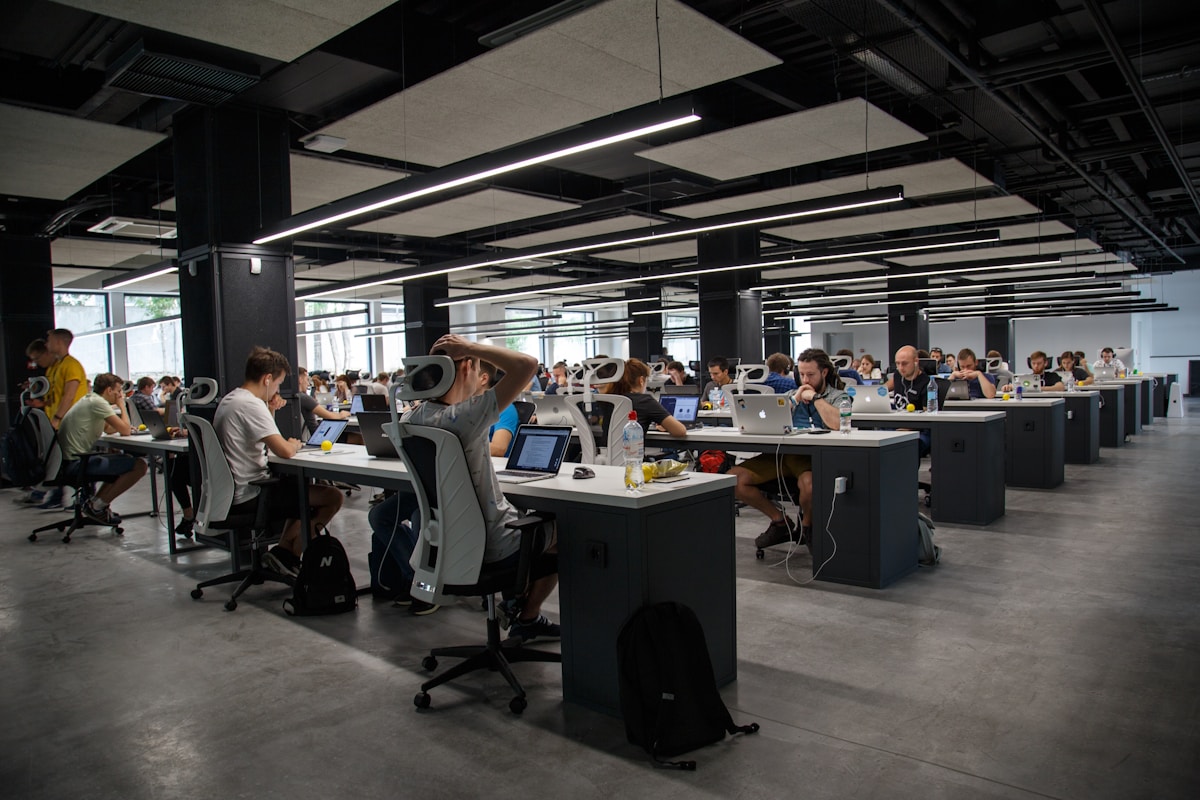
Meta's announcement that it was cutting roughly 8,000 employees — about 10% of its global workforce — while simultaneously reassigning some 7,000 more into AI-focused divisions is not a cost-cutting story. It is a structural bet on what the company believes the next decade of software development looks like. The layoffs, which began rolling out on 20 May 2026, represent the largest single workforce action in Meta's history by percentage of headcount, and they arrive as the company has committed between $125 billion and $145 billion in capital expenditure for the year — more than twice its 2025 outlay.
The Announcement: What Was Said, and By Whom
Meta Chief People Officer Janelle Gale issued an internal memo on 23 April 2026 confirming the restructuring after details had already leaked to the press. The memo was addressed to the company's roughly 80,000 employees and described both the cuts and the simultaneous creation of new AI-focused organizational units.
Mark Zuckerberg separately addressed remaining staff after notifications went out, acknowledging employee frustration over how the layoffs were handled — notifications arrived via email, beginning at 4 a.m. local time in Singapore as Asia-Pacific was first to be informed, then Europe, then the Americas (CNBC, 18 May 2026). In that follow-up communication, Zuckerberg stated the company does not intend to conduct additional company-wide layoffs in 2026.
The company is also cancelling approximately 6,000 open roles it had planned to fill, meaning the total workforce impact — positions either eliminated or never created — reaches around 14,000 (The Next Web, May 2026).
Which Teams Were Cut
The affected divisions include units that either overlap with what AI tools now handle automatically or sit outside Zuckerberg's current strategic priorities.
Recruiting and HR Operations
The human resources and global recruiting function absorbed significant cuts. With Meta having frozen hiring across many divisions and AI screening tools handling much of the initial candidate pipeline, maintaining a large recruiting apparatus has become harder to justify internally.
Reality Labs
Reality Labs, the division responsible for Meta's virtual and mixed-reality hardware products including Quest headsets, took heavy cuts. According to Bloomberg (25 March 2026), Reality Labs saw hundreds of positions eliminated in an earlier March round and continued to face reductions through May. The division had its budget cut by approximately 30% earlier in the year as funds were redirected toward what Meta is calling its "superintelligence" research track.
Sales and Ad Operations
Teams within global sales operations and ad business units were also affected. Meta's ad infrastructure is increasingly automated — the company's Advantage+ AI ad system now handles significant portions of campaign optimization without human intervention — making manual operations roles increasingly redundant.
Facebook and Family of Apps Product
Parts of the Facebook and broader Family of Apps product organisation were trimmed, particularly where middle-management layers had accumulated. The restructuring explicitly flattens reporting hierarchies across the company.
The 7,000 Who Were Moved, Not Cut
Concurrent with the layoffs, Meta announced the creation of several new AI-native organizational units into which approximately 7,000 employees are being "drafted" — the informal internal term for the reassignment process (NBC News, May 2026).
The named units include:
- Applied AI Engineering — focused on building AI systems embedded into Meta's consumer products
- Agent Transformation Accelerator XFN — a cross-functional team building autonomous AI agents for internal and external workflows
- Central Analytics — a data and measurement function restructured around AI-generated insights
These teams operate under what Meta describes as "AI-native" structures: leaner management layers, fewer approval gates, and an explicit mandate to build AI systems that can perform functions previously requiring human teams. The internal framing is that these are not standard product divisions but transformation units meant to remake how Meta builds and ships software.
Meta's Layoff History: Three Waves Compared
Meta's workforce decisions since 2022 follow a clear arc — from post-pandemic correction to AI-led structural change.
| Wave | Date | Headcount Cut | % of Workforce | Stated Rationale |
|---|---|---|---|---|
| 2022 "Year of Efficiency" | November 2022 | ~11,000 | ~13% | Post-pandemic over-hiring correction; metaverse bet underperforming; ad revenue decline |
| 2023 Restructuring | March–April 2023 | ~10,000 + 5,000 open roles cancelled | ~12% (of reduced base) | Continued "Year of Efficiency"; flattening management layers; Reality Labs losses |
| 2026 AI Pivot | May 2026 | ~8,000 + 6,000 open roles cancelled | ~10% | AI restructuring; redirect capital to superintelligence and agentic AI; eliminate roles AI now performs |
Sources: Meta SEC filings (FY2022, FY2023), CNBC (April 2026), The Next Web (May 2026).
The 2022 and 2023 waves were framed primarily as corrections to pandemic-era over-expansion. The 2026 wave is categorically different: Meta is profitable and generating record revenue. The cuts are not about survival; they are about composition. The company is explicitly shrinking the proportion of its workforce doing work that AI can automate while concentrating headcount on AI development and infrastructure.
What This Means for Tech Workers in India
Meta's India operations are small by hyperscaler standards — the company employs roughly 400 people across its Indian offices — but the 2026 restructuring still reached them.
According to Storyboard18 (27 May 2026) and BusinessToday (27 May 2026), Meta cut dozens of employees across its India teams, with impacted roles concentrated in ad sales, marketing, and individual contributor positions in product. Bengaluru and Hyderabad offices were both affected, with India following the same org-flattening logic as global restructuring.
The IT-Services Downstream Question
The more consequential India question is indirect. Indian IT-services firms — TCS, Infosys, Wipro, and others — derive meaningful revenue from tech hyperscaler contracts covering everything from data centre operations to QA, testing, and enterprise application management. When a company like Meta reduces headcount in operations and reorganises around AI-native tooling, it typically also reviews outsourced service contracts for functions the internal restructuring is meant to replace.
There is no publicly confirmed data on Meta-specific contract cancellations with Indian IT firms in this round. But the broader pattern is visible: TCS reduced its global workforce by 23,460 in FY26, Infosys continued selective reduction of its bench, and Wipro cut fresher hiring guidance significantly (Business Standard, 2026). The common underlying dynamic is that Big Tech customers are automating the work that drove IT-services growth in the previous decade. Meta's restructuring is one instance of that shift, not an isolated event.
The risk for mid-level Indian engineers employed by IT-services firms on Meta accounts — in areas like ad platform support, content moderation tooling, or data pipeline management — is that these contracts face non-renewal rather than dramatic cancellation. The change arrives quietly.
The Wider Pattern: AI Restructuring Across Big Tech
Meta is not acting in isolation. The first five months of 2026 have seen more than 142,000 tech-sector layoffs globally, even as the same companies collectively committed roughly $725 billion in 2026 capital expenditure (TechTimes, 29 May 2026). The arithmetic is deliberate: fewer generalist employees, more compute.
Microsoft
Microsoft launched what it described as a voluntary buyout programme for approximately 8,750 US employees in April 2026, structured around a Rule of 70 formula targeting long-tenured staff in enterprise infrastructure, operations, and sales. Critically, engineers on Azure OpenAI Service, GitHub Copilot, and related AI engineering teams were explicitly exempted. Microsoft CFO Amy Hood confirmed on an earnings call that headcount will continue to decline on a year-over-year basis through the next fiscal year (CFO Dive, 2026).
Google's 2026 reductions have been more distributed — smaller cuts across more teams, with the Gemini product organisation consolidated under a unified structure and headcount in certain search quality and infrastructure roles reduced as AI tooling absorbed the workload.
The shared logic: every major platform company is right-sizing the ratio of human labour to AI capability. The jobs that disappear are not primarily in AI; they are in the operational and administrative layers that were built during a period when scale required proportionally large human teams. That period is ending.
What to Watch
-
Reality Labs trajectory: Meta has not announced whether it will sustain or further reduce Reality Labs headcount through 2026. The division has cost tens of billions with limited commercial return. Watch whether Zuckerberg folds remaining AR/VR ambitions into AI-native interfaces or continues to treat them as a separate product line.
-
The 7,000 reassignments: Whether those drafted into Applied AI Engineering and Agent Transformation Accelerator produce measurable output — or whether these units become holding structures for employees awaiting further cuts — will be visible in Meta's product announcements through late 2026 and into 2027.
-
India ad sales exposure: Meta's India ad business is growing as digital advertising spend in the country accelerates. If the ad sales cuts in India reduce coverage of mid-market advertisers, watch for regional ad agencies and performance marketers to flag account management gaps.
-
IT-services contract signals: Infosys and Wipro both report quarterly with commentary on client-specific decisions. Silence on Meta accounts in upcoming earnings calls is as informative as explicit mention.
-
Zuckerberg's "no more company-wide cuts" commitment: This is a conditional statement, not a contractual one. If Meta's $125–145 billion capex cycle delivers slower-than-expected AI revenue, the pressure to cut again will return. The 2023 "Year of Efficiency" was also declared finished before it was.
-
India GCC opportunity: The same restructuring that cuts contractor dependency at Meta is accelerating GCC (Global Capability Centre) build-out by other hyperscalers in India. Displaced tech workers from Indian IT services firms are a talent pool that GCCs are actively targeting. Watch hiring volumes at Bengaluru and Hyderabad GCCs of US Big Tech firms through Q3 2026.