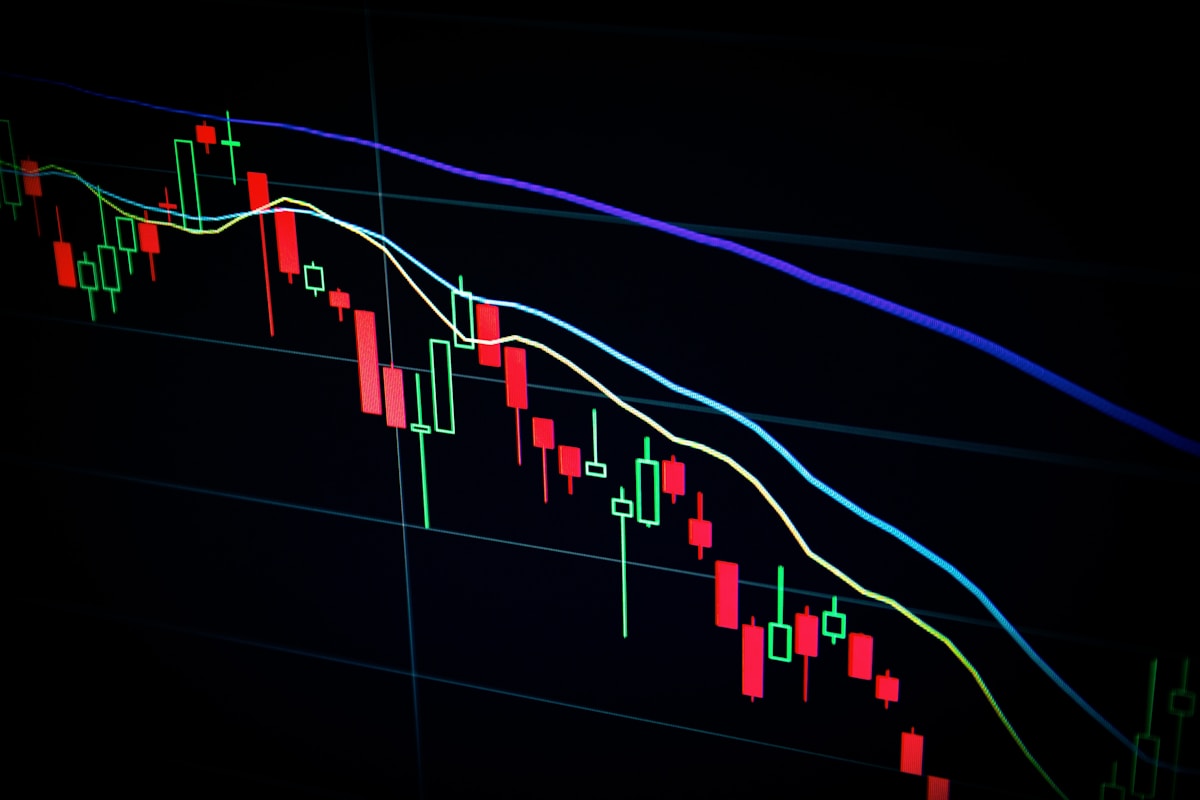
Sensex Sheds 719 Points on June 8 as Crude Tops $97
Sensex opened down 800+ points Monday after fresh Israel-Iran strikes sent Brent crude above $97. FII outflows of Rs 8,776 cr on Friday set the stage. Here is what moved and what to watch next.
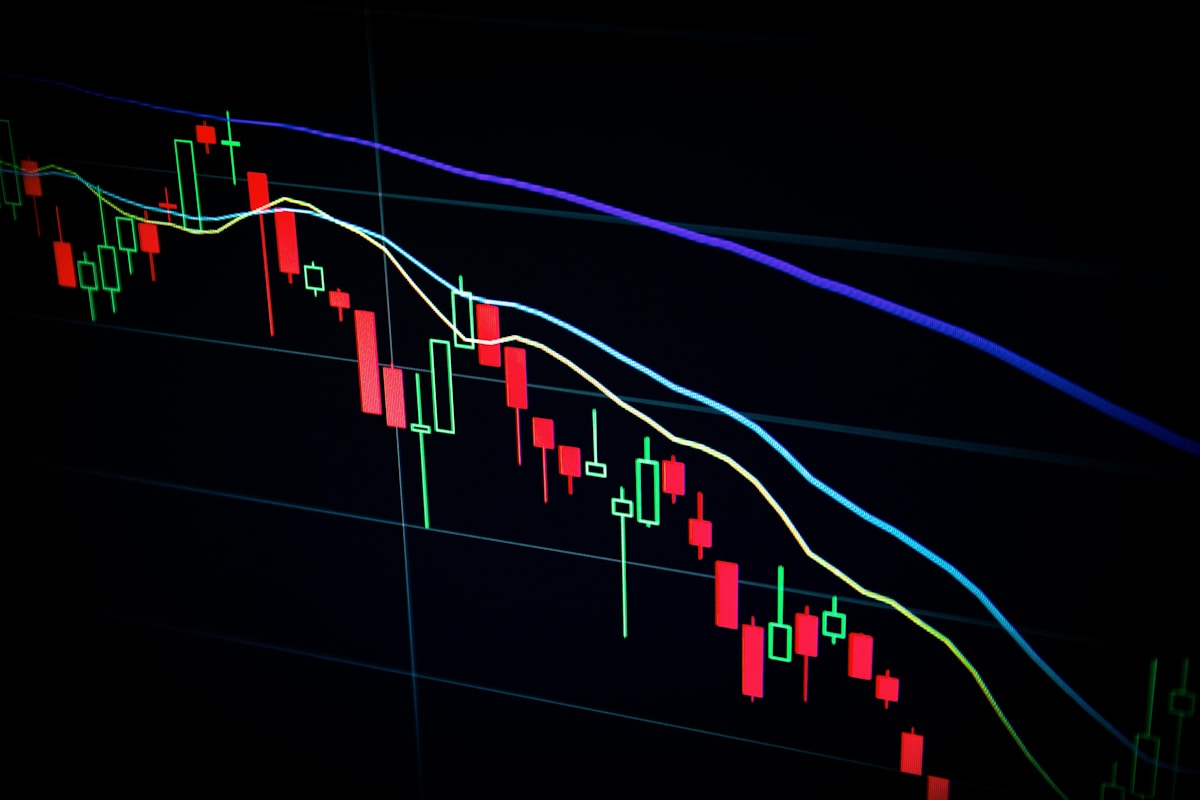
Sensex Sheds 719 Points, Nifty Closes at 23,123 as West Asia Conflict Reignites Monday Selloff
Indian equities had one of their sharpest single-session falls in weeks on Monday, June 8, as a cocktail of surging crude, fresh Israel-Iran strikes, and FII positioning pressure that was already building on Friday drove the BSE Sensex down 719 points to close at 73,524.26 — after opening at a gap-down of more than 800 points at 73,421.61. The Nifty 50 slipped to an intraday low of 23,080 before paring losses to end at 23,123, down 243.70 points or 1.04%. For retail investors trying to make sense of a market that opened down 1.1% before many had finished their morning tea, here is what moved the needle, what held, and what the rest of the week may bring. (Business Standard, Upstox)
The Friday Foundation: Where Markets Left Off
Before addressing Monday's gap-down, it helps to understand the position markets were already in. On Friday, June 5, the Sensex closed at 74,243.34, down 116 points on the day, while the Nifty ended at 23,366.70, off 49 points. Both indices were already in retreat — the RBI's MPC announcement that afternoon, while broadly expected, did nothing to reverse the drift.
The flow data from that session laid the groundwork for Monday's weakness. Foreign institutional investors (FIIs) recorded net outflows of ₹8,776.25 crore on June 5. Domestic institutional investors (DIIs) partially absorbed that selling with net purchases of ₹9,133.57 crore — but the FII positioning signalled that overseas money managers were reducing India exposure heading into a weekend of unresolved geopolitical risk. (NSE India)
| Metric | Value (June 5 close) |
|---|---|
| BSE Sensex close | 74,243.34 |
| Sensex change | -116 pts |
| Nifty 50 close | 23,366.70 |
| Nifty 50 change | -49 pts |
| FII net flows | -₹8,776.25 cr |
| DII net flows | +₹9,133.57 cr |
What Drove Monday's Selloff
Three overlapping fault lines triggered the gap-down open.
West Asia: fresh strikes over the weekend. Israel and Iran traded strikes on June 7–8, reigniting fears of a broader regional war. This is the 121st week of active conflict since the Strait of Hormuz crisis began on February 28, 2026, when US-Israeli Operation Epic Fury targeted Iranian military and nuclear facilities. The Strait — through which roughly 20 million barrels of crude transited daily pre-conflict — has been severely disrupted since then, with Iranian Revolutionary Guard forces mining sea lanes and attacking commercial vessels. The latest exchange of strikes dimmed hopes of any near-term de-escalation. (Wikipedia: 2026 Iran war, Al Jazeera)
Crude oil above $97. Brent crude surged more than 4.5% on Monday to trade at $97.35–$97.68 per barrel, touching levels not seen since the early weeks of the conflict. For India, which imports approximately 70% of its crude requirement in US dollars, every $10 per barrel move in Brent translates into a meaningful widening of the current account deficit. With the rupee already weakened to around 95.7 per dollar — off sharply from the 90-per-dollar level of late 2025 — the combined oil-plus-currency pressure on India's import bill is material. The government had already cut excise duties by ₹10 per litre in March to contain pump-price pass-through; further fiscal headroom is limited. (HDFCSky)
US tariff uncertainty and dollar strength. While a bilateral India-US trade deal announced in February 2026 reduced headline tariffs on most Indian goods from 50% to 18%, exporters continue to adjust to the new terms. The broader environment of a strong dollar — buoyed by safe-haven flows out of emerging markets — keeps Indian export competitiveness under pressure even as IT and pharma companies nominally benefit from rupee weakness on their dollar revenues. The rupee's record low of 96.8 per dollar in May 2026 is a recent reference point for how quickly sentiment can deteriorate. (ORF)
What the RBI Said Friday — and Why It Was Not Enough to Cushion Monday
The RBI's Monetary Policy Committee, in its 104th meeting, held the repo rate unchanged at 5.25% on June 5, with a unanimous vote and a 'Neutral' stance retained for the third consecutive meeting. Governor Sanjay Malhotra cited "rising risks from the prolonged West Asia conflict, elevated energy prices, supply-chain disruptions and weather-related uncertainties" as reasons for the hold. The central bank simultaneously lowered its FY2026-27 real GDP growth forecast to 6.6% (from 6.9%) and raised its CPI inflation projection to 5.1% (from 4.6%). This combination — slower growth expected, higher inflation expected — is not the backdrop that emboldens equity buyers. (Upstox/RBI Policy, WION)
Two data points offered partial reassurance: India's FY26 GDP came in at 7.7% — above consensus forecasts and driven by manufacturing and services — and the RBI's rate hold avoided any surprise tightening. Neither was sufficient to override the geopolitical headwinds.
Sectoral Wrap: Monday June 8
The selloff was broad but not uniform. IT and metals bore the sharpest losses; defensives in pharma and healthcare managed to close in positive territory.
| Sector / Stock | Performance (June 8) |
|---|---|
| Nifty IT | -1.23% (closed 28,653.55) |
| Wipro | -8.45% (₹181.60) |
| Nifty Metal | -1.58% (13,013.10) |
| Hindalco | -2.10% (₹1,069.40) |
| Nifty Realty | -1.89% (754.35) |
| IndiGo | -2.60% |
| Mahindra & Mahindra | -2.10% |
| Tata Motors | ₹365 (intraday pressure, auto sector weak) |
| Nifty Pharma | +0.51% (24,371.95) |
| Nifty Healthcare | +0.39% (15,469.75) |
| Nifty PSU Bank | +0.05% (8,262.85) |
| Max Healthcare | Gain |
| Bharti Airtel | Gain |
Sources: Business Upturn, HDFCSky
Wipro's 8.45% single-day fall was the Nifty 50's steepest drop on the day — it reflects both the global tech selloff and company-specific concerns rather than any India-specific trigger, but it dragged the IT index sharply. Adani Enterprises and Reliance Industries were among stocks flagged for watch on Monday morning; with auto sector pressure, Tata Motors traded at ₹365 in an environment where JLR's Europe exposure and domestic passenger-vehicle demand outlook are both uncertain under elevated fuel costs.
Pharma outperformed for two interlocked reasons: dollar revenues look better when the rupee weakens, and defensives attract flows when macro visibility is poor. Sun Pharma rose 0.72% and Dr. Reddy's added 0.48%. PSU banks barely stayed positive, propped by selective buying in public-sector names after the RBI hold removed near-term rate-hike risk.
The Crude-INR Bind for Retail Investors
This point deserves its own treatment because it affects Indian households directly, not just institutional portfolios.
India imports roughly 85 million metric tonnes of crude oil per year, paying in dollars. When Brent is at $97 and the rupee is at 95.7 per dollar, the per-barrel rupee cost is approximately ₹9,284 — compared with perhaps ₹7,200 at $80/bbl and ₹84/dollar. That difference compounds across the entire import bill and feeds through into diesel (logistics), LPG (households), and aviation turbine fuel (airline tickets). The government already cut excise duties in March; the fiscal buffer to repeat that is narrower now.
For investors holding energy-intensive manufacturing stocks — auto ancillaries, cement, chemicals, airlines — elevated crude is a sustained margin headwind. For IT exporters and pharma companies with predominantly dollar revenues, the same rupee weakness that hurts importers provides a revenue tailwind in rupee terms, which partly explains Monday's sectoral divergence.
What to Watch: June 9–12
-
Crude trajectory. The key variable remains whether fresh diplomatic channels between the US and Iran gain traction. Fitch projected Brent at an $87/barrel average for 2026, contingent on some Hormuz reopening after July — that base case looks increasingly fragile after the June 7–8 exchange of strikes. Any escalation that pushes Brent above $100 would likely test equity support levels again.
-
FII flows. Friday's ₹8,776 crore outflow was the immediate precursor to Monday's gap-down. If FIIs continue reducing India exposure through the week — reflecting both geopolitical risk aversion and dollar strength — DII buying alone may not be sufficient to stabilise mid-cap and small-cap indices, which are typically more vulnerable to liquidity withdrawal.
-
INR stabilisation. The rupee's trajectory from its 95.7 Friday close will be watched. Any move toward the May record low of 96.8 would signal renewed risk-off pressure; a recovery toward 94–95 would suggest some stabilisation of capital flows.
-
India CPI (due mid-June). April's CPI printed at 3.48%, above March but well below the RBI's 4.6% FY27 forecast. The May reading, due around June 12–13, will be scrutinised for signs that higher energy costs are filtering into headline inflation. A print above 4% could revive conversation about whether the RBI's 'neutral' stance has room for future cuts, or whether it becomes more restrictive.
-
Nifty technical levels. The 23,080 intraday low touched Monday represents an important support zone. A sustained close below 23,000 would put the February-March lows back in focus. On the upside, a recovery above 23,400 — the Friday close level — would be the first technical signal that buying interest has returned at current levels.
-
Global cues. Asian markets fell in sympathy with Wall Street's tech-led selloff that preceded Monday's Indian open. US markets' reaction to any fresh West Asia headlines through the week will be a lead indicator for Tuesday–Friday trading in Mumbai.
Retail investors are watching a market pulled in two directions: the fundamental story — 7.7% FY26 GDP, a central bank that has room to cut when the inflation trajectory permits, and a trade deal with the US that reduces one source of uncertainty — has not deteriorated. What has deteriorated, sharply, is the external environment. Sitting on the sidelines during geopolitical volatility has historically meant missing recoveries; adding aggressively into gap-down openings has historically meant catching falling knives. The honest answer for most retail investors is that the week ahead calls for observation before action.