RCB Win Back-to-Back IPL Titles: Kohli's 75 Seals Final Over GT
Kohli's 75 not out off 42 balls — his fastest IPL fifty — powered RCB to a 5-wicket win over Gujarat Titans at Ahmedabad, making them only the third franchise to defend the IPL title.

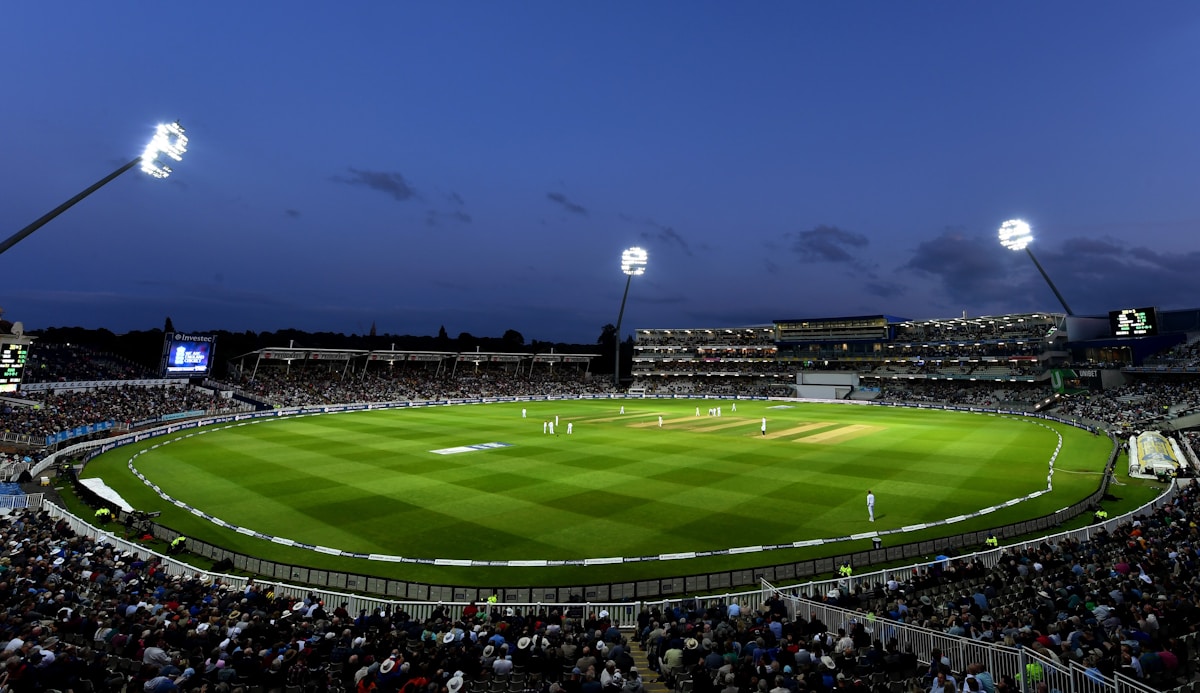
For seventeen years, Royal Challengers Bengaluru carried the tag that defined them more than any run-scorer or wicket-taker: the most popular team in Indian cricket never to have won the IPL. That changed in 2025 when Rajat Patidar's side beat Punjab Kings in a nervy six-run final. Twelve months later at the Narendra Modi Stadium in Ahmedabad, RCB answered a different, harder question — can you do it again? The answer, delivered with 12 balls to spare against a Gujarat Titans side that had looked threatening all tournament, was unambiguous. RCB 161 for 5 in 18 overs. GT 155 for 8 in 20. Five wickets. Back to back. Only the third franchise in IPL history to defend the title, after CSK (2010–11) and Mumbai Indians (2019–20).
Virat Kohli finished the match with a six over long-on, the ball landing somewhere in that vast Ahmedabad outfield while 130,000 people registered a sound that has no adequate description. He had 75 not out off 42 balls. It was his highest score in any IPL playoff match and, at 25 balls, the fastest half-century of his 18-year IPL career. At 37. In a final. Against a team captained by Shubman Gill, the man most people had picked to lift the trophy.
GT's Innings: Powerplay Damage Done Early
Gujarat Titans won the toss and chose to bat, a decision that looked reasonable given the Ahmedabad surface had historically favoured teams setting totals. It did not survive the first three overs.
Josh Hazlewood, who had been RCB's most economical seamer across the tournament, removed Shubman Gill with the fifth ball of the third over. Gill had scratched around for 10 off 8 balls, unable to get the boundary he needed to settle. The dismissal broke a pattern GT had relied on all season: Gill's powerplay aggression framing everything that came after. With him gone for single figures in a final for the second time in three years, GT's batting order was exposed to the pressure of rebuilding rather than accelerating.
Bhuvneshwar Kumar, playing in his third IPL final at 36, was not giving anything away at the other end. Sai Sudharsan, the elegant left-hander who had been one of the finds of the 2026 season, lasted 12 balls for 12. Bhuvneshwar had him caught without playing a false shot of note — he was simply starved of anything to drive.
At the end of six overs GT were 45 for 2. It was not a catastrophic powerplay score, but it was a constrained one. Nishant Sindhu, promoted to accelerate, hit 20 off 18 balls including three fours and was then caught off Rasikh Salam Dar. At 73 for 3 after 12 overs, GT were on pace for approximately 145 — a defendable but not comfortable total on this surface.
The Buttler Drag and Sundar's Rescue
Jos Buttler arrived at four with the brief to anchor. For 23 balls he scored 19 — a 82.6 strike rate that read adequately against the pitch but did not arrest the slide. Krunal Pandya had him stumped in the 13th over — Jitesh Sharma whipping off the bails cleanly — and GT were 83 for 4.
What followed was GT's death-overs gamble half-executed. Arshad Khan hit 15 off 6 balls (Hazlewood, over 15, cleaning him up). Rahul Tewatia scored 7 off 5 before Rasikh removed him in the 17th. Jason Holder chipped in with 7 off 5 (Bhuvneshwar, over 18). Rashid Khan swung 7 off 3. The lower order collectively produced a late-innings push that, with Washington Sundar's anchoring presence, got GT to 155 for 8.
Sundar's innings deserves specific attention. He came in at the fall of Buttler and stayed until the end: 50 not out off 37 balls, unbeaten, having held the tail together while it wagged. Without him, GT finish somewhere around 130. With him, 155 felt like a total that could defend.
RCB Bowling Summary
| Bowler | O | M | R | W |
|---|---|---|---|---|
| Josh Hazlewood | 4 | 0 | 37 | 2 |
| Bhuvneshwar Kumar | 4 | 0 | 29 | 2 |
| Rasikh Salam Dar | 4 | 0 | 27 | 3 |
| Krunal Pandya | 4 | 0 | 23 | 1 |
| Virat Kohli (Impact) | — | — | — | — |
Source: ESPNcricinfo full scorecard
Rasikh Salam Dar's 3 for 27 was the headline bowling figure, but the match was shaped in the powerplay by Hazlewood and Bhuvneshwar. The pair took 4 wickets between them across overs 1 to 6, and between them conceded 66 runs across their combined 8 overs — 8.25 per over at death but 5.00 in their shared powerplay allocation. That is the arithmetic that restricted GT to 155.
GT Batting Scorecard (Top 6)
| Batter | R | B | SR |
|---|---|---|---|
| Shubman Gill (c) | 10 | 8 | 125.0 |
| Sai Sudharsan | 12 | 12 | 100.0 |
| Nishant Sindhu | 20 | 18 | 111.1 |
| Jos Buttler (wk) | 19 | 23 | 82.6 |
| Rahul Tewatia | 7 | 5 | 140.0 |
| Washington Sundar | 50* | 37 | 135.1 |
Source: ESPNcricinfo full scorecard, iplt20.com match centre
RCB's Chase: The Kohli-Venkatesh Platform
RCB needed 156 from 20 overs. With an Impact Player substitution available and a batting order that had Kohli at three, the task looked manageable — not easy on that surface, but within reach if they avoided early wickets.
They did not avoid early wickets, strictly speaking — Venkatesh Iyer was dismissed for 32 off 16 balls — but what he did in those 16 balls changed the complexion of the chase entirely. Four boundaries and two sixes in the first four overs gave RCB 53 for 1 at the end of the powerplay. The Kohli-Venkatesh stand produced 53 runs in 3.3 overs, the fastest team fifty in an IPL final.
Venkatesh's dismissal — caught off Mohammed Siraj — could have been the hinge moment. Instead, Kohli accelerated rather than consolidated. He reached 50 in 25 balls, his fastest IPL half-century, passing his previous best of 26 balls (achieved twice in 2018). At 37, against the best IPL bowling attack GT could assemble, in the final, under the lights in Ahmedabad.
Rashid's Double Blow and the Chase's One Anxious Passage
The only sustained pressure RCB faced came in the ninth over. Rashid Khan, who had been economical throughout the tournament and had taken GT to the final with a series of clutch performances, bowled Rajat Patidar and Krunal Pandya off consecutive deliveries. In four balls he conceded 3 runs and took 2 wickets, reducing RCB to 91 for 4. Suddenly 65 were needed from 11 overs with one wicket intact before the tail.
Tim David walked in. He has a specific purpose in T20 cricket — finish matches that are within touching distance and need someone who does not blink. He scored 24 off 17 balls, including three fours and a six, and his 41-run fifth-wicket stand with Kohli (from the 9th to the 14th over) turned the anxious passage into a controlled run-down. Arshad Khan removed David in the 14th over, bringing in Jitesh Sharma.
By then, RCB needed 15 from 4 overs with Kohli unbeaten on 62. It was not a chase anymore. It was a procession.
Kohli closed it in the 18th over with a six over long-on — his third of the innings — to finish 75 not out off 42 balls: 9 fours, 3 sixes, strike rate 178.6.
RCB Batting Scorecard (Top 6)
| Batter | R | B | SR |
|---|---|---|---|
| Venkatesh Iyer | 32 | 16 | 200.0 |
| Virat Kohli | 75* | 42 | 178.6 |
| Rajat Patidar (c) | 15 | 13 | 115.4 |
| Krunal Pandya | 0 | 1 | 0.0 |
| Tim David | 24 | 17 | 141.2 |
| Jitesh Sharma (wk) | 11* | 14 | 78.6 |
Source: ESPNcricinfo full scorecard, iplt20.com match centre
GT Bowling Summary
| Bowler | O | M | R | W |
|---|---|---|---|---|
| Mohammed Siraj | 4 | 0 | 35 | 1 |
| Rashid Khan | 4 | 0 | 25 | 2 |
| Arshad Khan | 3 | 0 | 38 | 1 |
| Jason Holder | 3 | 0 | 34 | 0 |
| Nishant Sindhu | 2 | 0 | 18 | 0 |
| Azmatullah Omarzai | 2 | 0 | 11 | 1 |
Source: ESPNcricinfo full scorecard
The Turning Point: Overs 1–6 in GT's Innings
Post-match analysis from multiple reporters converged on the same sequence: overs 1 to 6, GT's batting. The numbers from that passage — 45 for 2 with both their top-order pillars gone — set a ceiling on what was achievable. A GT batting order that had chased 215 against Rajasthan Royals in Qualifier 2, led by a century from Gill, arrived at the final and found no room to play.
Hazlewood has become one of IPL cricket's most reliable powerplay operators. His length creates a specific problem for batters who want to drive on the up: the ball does not sit up. Gill has been dismissed in IPL finals driving length balls that seam in. Hazlewood found him with the same template.
The seam troika — Hazlewood, Bhuvneshwar, Rasikh — across 12 combined overs gave up 93 runs and took 7 wickets. That is 7.75 per over at a strike rate of 10.3 balls per wicket. In a 20-over final, that does the job.
RCB's Franchise Arc: From Perpetual Runners-Up to Back-to-Back Champions
RCB appeared in three finals before 2025 — 2009, 2011, 2016 — and lost all three. For the nine years after 2016 they became the canonical example of a team with star power and structural fragility. The 2025 season changed everything structurally, not just the result. Under Patidar's captaincy, RCB built a bowling unit rather than relying solely on a batting line-up to outscore problems. Hazlewood was the anchor of that bowling attack in 2025 (22 wickets in the season). Rasikh, a right-arm seamer from Jammu, emerged as a complementary short-pitch specialist. Bhuvneshwar brought economy at the top. The template — seam-heavy, discipline-first, Kohli anchoring every pressure chase — carried through unchanged into 2026.
Joining CSK (2010–11) and Mumbai Indians (2019–20) in the back-to-back club is not a trivial record. CSK and MI are the two most decorated franchises in IPL history. RCB's equivalent foundation is Patidar's tactical clarity and Kohli performing in the biggest matches at an age when most batters have reduced their ambitions. This is not the same franchise as 2016. Two titles in two years is the evidence.
Awards and Tournament Honours
Virat Kohli won Player of the Match for his 75 not out (ESPNcricinfo). The tournament's wider individual awards went largely to players outside the final — Vaibhav Sooryavanshi of Rajasthan Royals won the Orange Cap (776 runs at a strike rate of 237.30), the Most Valuable Player award, the Emerging Player award, the Super Striker award, and the Super Sixes award. The 15-year-old became the youngest Orange Cap winner in IPL history.
The Purple Cap went to Kagiso Rabada, who took 29 wickets in 17 matches for Gujarat Titans across the tournament — though his team ultimately finished runners-up.
Sooryavanshi's MVP was the season-long tournament equivalent, not a separate final award.
Takeaways
-
GT's powerplay cost them the match. Losing Gill (10) and Sudharsan (12) inside 6 overs removed the top-order platform GT had relied on through Qualifier 2 against Rajasthan Royals. Washington Sundar's 50 not out saved respectability; it could not save the match.
-
RCB's seam trio is the best in the tournament. Hazlewood (2/37), Bhuvneshwar (2/29), and Rasikh Salam (3/27) combined for 7/93 across 12 overs. No other team in IPL 2026 assembled three seamers operating at this level simultaneously.
-
Kohli at 37 is performing his best cricket in big matches. Fastest IPL fifty of his career (25 balls). Highest IPL playoff score (75 not out). In a final. This is not sentiment — it is the scorecard.
-
The Rashid overs matter, but did not decide the match. His 2/25 in 4 overs was the only passage where GT looked capable of a dramatic reversal. The partnership with Tim David (41 runs) absorbed that pressure within three overs.
-
RCB are now structurally sound, not just talent-heavy. The addition of bowling depth — Rasikh's development, Bhuvneshwar's retention, Hazlewood's continuing IPL presence — represents a genuine organisational shift from the 2009–2016 era of fragile brilliance.
-
Vaibhav Sooryavanshi is the story of IPL 2026 that extends beyond this final. A 15-year-old winning Orange Cap and MVP at 237.30 strike rate is not a one-match story. Watch the 2027 auction with his name at the top of the sheet.
-
RCB are now the third franchise to defend the IPL title, joining CSK (2010–11) and Mumbai Indians (2019–20). The company they keep is the two most successful franchises in IPL history.