SpaceX SPCX: One Week on Nasdaq, $50 Swing, What Comes Next
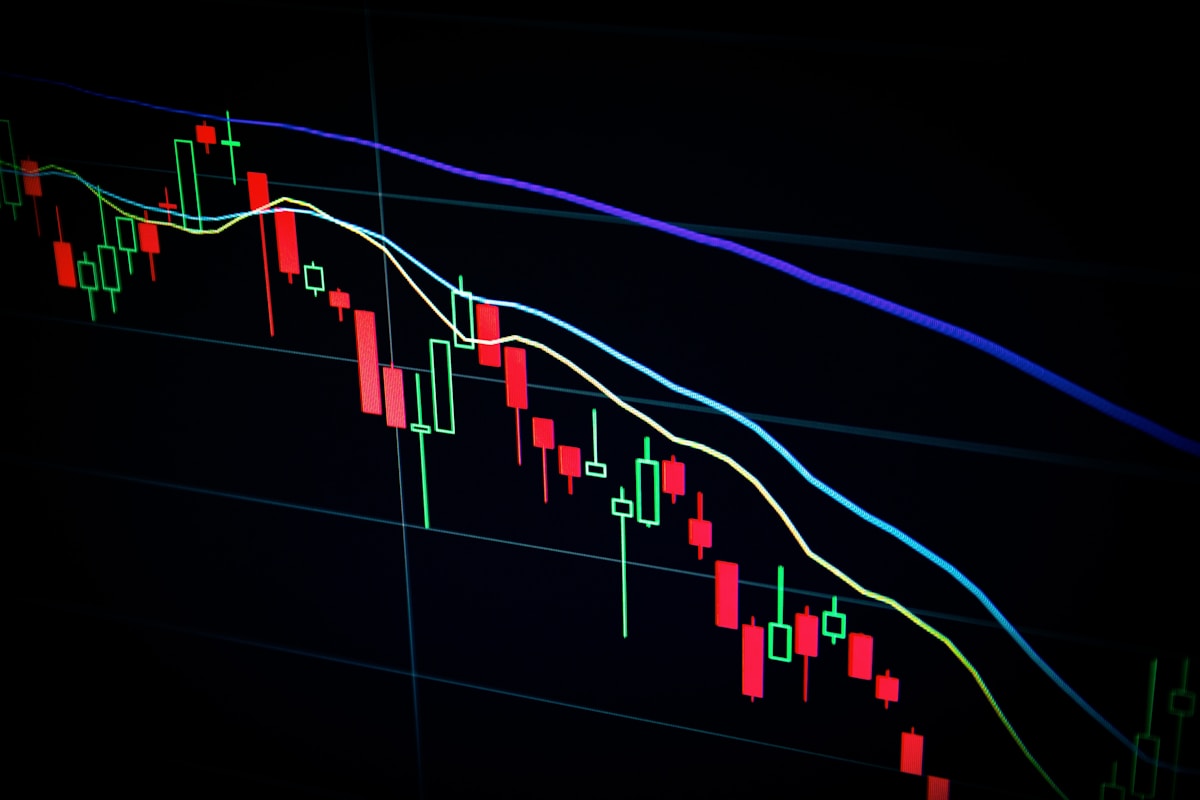
SPCX opened at $160.95, spiked to $225.64 on Day 4, and closed the week at $174.90. Here is what drove each move, what the $75B raise funds, and what Indian retail investors need to know.
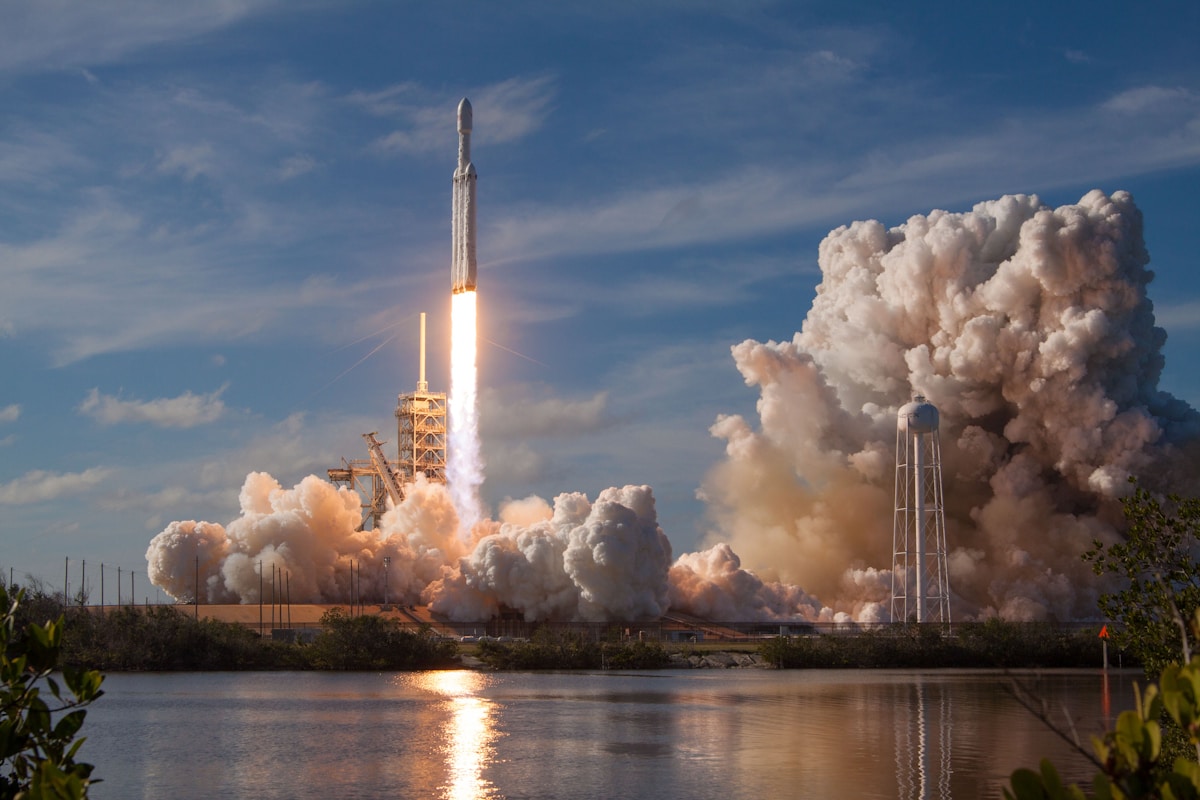
SpaceX landed on public markets on June 12, 2026, as the largest IPO in recorded history. One week later, SPCX sits at $174.90 — 29.6% above its $135 issue price, but $50 below its intraday peak and already the subject of warnings from former exchange chiefs about a stock untethered from fundamentals. What that first week actually looked like, and what it means for the AI-economy IPO cycle that follows, is worth examining closely.
The Numbers: What $75 Billion Buys
SpaceX sold 555,555,555 Class A shares at $135 per share on June 11, pricing the IPO at a $1.75 trillion valuation and raising $75 billion — roughly three times the previous record for a single IPO offering (Bloomberg). Underwriters hold an overallotment option for an additional 83.3 million shares at the same price, which would bring gross proceeds to approximately $86.25 billion if exercised.
The S-1 filed with the SEC on May 20, 2026, disclosed how those proceeds are expected to be deployed (SEC EDGAR). The broad categories are:
- Starlink constellation expansion — SpaceX has 10.3 million subscribers as of March 2026, up from 8.9 million at end-2025. The company targets V3 Starlink satellite deployments in the second half of 2026, with a single Starship flight carrying up to 60 V3 units — a step-change in deployment economics.
- Starship development and production — Total Starship investment has already crossed $15 billion per the S-1 (BNN Bloomberg). SpaceX described Starship as central to achieving airline-like operational cadence. Orbital payload delivery is targeted from the second half of 2026 onward. This is the plumbing for everything else — without reusable super-heavy lift, both Starlink V3 economics and any Mars development scenario remain theoretical.
- xAI infrastructure — SpaceX absorbed xAI in February 2026 in what CNBC valued at a $1.25 trillion combined entity at close (CNBC). The S-1 is explicit that Starlink profits, which generated $4.4 billion in operating income on $11.4 billion in revenue in 2025, are cross-subsidising xAI losses. That dynamic continues with IPO capital now supplementing the internal transfer.
- Mars development — Mentioned in the prospectus as a long-term programme. Analysts at Sacra, Quilty Space, and Morningstar consistently flag Mars as a multi-decade funding story; near-term proceeds are unlikely to move the needle there materially.
On the financials: SpaceX reported $18.7 billion in total revenue for 2025, with a net loss of $4.9 billion and an adjusted EBITDA of $6.6 billion. The Connectivity segment — essentially Starlink — accounted for 61% of revenue and generated $7.2 billion in EBITDA. The loss is largely the Starship and xAI burn. Quilty Space projects Starlink revenue climbs to roughly $20 billion in 2026.
Day 1: Record Pop, Record Volume
Shares opened at $160.95 on June 12, a 19.2% premium to the $135 IPO price, and closed at $160.95 — SpaceX's first public close also happens to be its Day-1 all-time low (CNBC). The intraday low was $149.34. On Vested Finance, SPCX accounted for 15% of all platform trading volume that day, with 25% of active users participating in the stock. Those numbers speak to the hunger for access among Indian retail investors who could not participate in the IPO allocation directly.
The Day-1 close pushed SpaceX's market capitalisation past $2 trillion — above Saudi Aramco, below only Apple, Nvidia, Microsoft, and Alphabet at that moment.
The First-Week Trading Table
The week's price action tells a more complicated story than a clean post-IPO rally.
| Date | Open ($) | Close ($) | % Move | Volume (approx.) | Catalyst |
|---|---|---|---|---|---|
| Jun 12 (Thu) | 160.95 | 160.95 | +19.2% vs IPO | Very high | IPO debut, index inclusion speculation |
| Jun 13 (Fri) | ~163 | ~176 | +9.3% | High | Post-debut momentum, short supply |
| Jun 16 (Mon) | ~192 | ~216 | +22.7% | 219M+ shares | Options chain debut; implied vol 158-169% |
| Jun 17 (Tue) | ~216 | ~191.82 | -11.2% | High | Pullback from $225.64 peak; ex-Nasdaq chief warning |
| Jun 18 (Wed) | 188.39 | 174.90 | -8.8% | Elevated | Continued correction; two-day losing streak |
Week-high: $225.64 intraday on June 16. Week-low: $149.34 intraday on June 12.
Closing range (Jun 12 – Jun 18): $160.95 to $216 approximately.
As of June 18 close: $174.90, implying a $2.4 trillion market capitalisation (Investing.com).
Day 4: The $225 Spike and What Drove It
June 16 was the outlier. Three things converged:
Options debut. SPCX options began trading for the first time, setting a record for single-stock options volume on a debut day. The at-the-money two-day weekly expiry opened with implied volatility of approximately 169%, declining to 78% at the longest available tenor — a structure called extreme backwardation, in which near-term uncertainty is priced far higher than long-term uncertainty (Saxo Bank, Gurufocus). When dealers hedge freshly sold calls, they buy the underlying stock. With a 4.25% free float — the lowest initial float ever recorded for a large-cap US tech IPO — those hedge flows moved a thin market sharply.
Cursor acquisition announcement. Also on June 16, SpaceX confirmed it would acquire Anysphere, the company behind AI coding tool Cursor, for $60 billion in an all-stock deal, pending regulatory approval (CNBC, TechCrunch). Cursor had roughly $2.6 billion in annualised revenue and enterprise sales momentum. The market read it as confirmation that SpaceX is repositioning as an AI conglomerate — rockets, satellites, xAI Grok infrastructure, and now developer tooling — rather than a pure aerospace company.
Low float amplification. The stock moved from $135 at IPO pricing to $225.64 intraday — a 67% move in four trading sessions — with no quarterly earnings release, no underwriter analyst upgrades (still in their quiet period), and no change in underlying business fundamentals. Former Nasdaq CEO Robert Greifeld said publicly that SPCX was "not trading on fundamentals," pointing to the sentiment-driven mechanics of a restricted float market (TradingKey).
By June 17, the stock had pulled back to $191.82. By June 18 close, $174.90. Neither move had an obvious single catalyst — they reflected the same thin-float mechanics working in reverse as momentum faded.
The Lockup Arithmetic: 96% of Shares Still Locked
The volatility picture is inseparable from the ownership structure. SpaceX IPO'd with a free float of approximately 4.25% — 555 million shares publicly traded against 13 billion total shares outstanding (CoinEx). The remaining 96% is under lock-up.
The lock-up structure is unusually tiered (Yahoo Finance / Motley Fool):
- 20% of eligible insider shares unlock once SpaceX publishes its first quarterly earnings as a public company (covering April–June 2026), plus an additional 10% if the stock is 30%+ above the IPO price at that point.
- Five tranches of 7% each release at 70, 90, 105, 120, and 135 days post-IPO.
- 28% more unlocks upon the July–September quarterly earnings release.
- Full remainder comes off at 180 days — approximately December 2026.
Elon Musk is explicitly excluded from the accelerated release schedule; he remains subject to the full 180-day restriction.
The practical implication: the August earnings release is the first material supply event. At current valuations, even a partial early unlock could represent tens of billions of dollars in potential selling pressure. How the stock behaves around that window is likely to be more consequential than any single day's trading in this first week.
The AI IPO Read-Through: OpenAI and Anthropic Watch Carefully
SpaceX's debut matters beyond aerospace because it is the proof-of-concept for a larger thesis: that a generation of privately-held AI-adjacent companies can access public capital at multi-trillion-dollar valuations. Two names sit directly in its slipstream.
Anthropic filed its IPO prospectus on June 1, 2026, at a $965 billion valuation with an annualised revenue run-rate approaching $47 billion. OpenAI filed on June 8, targeting a Q4 2026 listing near an $852 billion valuation — but is guiding to a net loss of approximately $14 billion for 2026, with positive cash flow not expected until the end of the decade (IndMoney / AI Funding Tracker).
Goldman Sachs analysts projected 2026 US IPO proceeds could reach $160 billion — a fourfold increase from 2025's $45 billion total. SpaceX alone accounts for almost half of that. The question the market is now asking: is there appetite for OpenAI and Anthropic after absorbing $75 billion from SPCX, with a $60 billion Cursor deal adding further equity dilution pressure?
SPCX's first-week performance offers a conditional answer. Demand was demonstrably there — the IPO was heavily oversubscribed and the opening premium was substantial. But the pullback from $225 to $174 also signals that institutional allocators are not willing to chase indefinitely at any valuation. For Anthropic and OpenAI, the window matters as much as the price.
Indian Retail Access: How, At What Cost, and What to Know
SPCX is accessible to Indian investors through platforms operating under the RBI's Liberalised Remittance Scheme — Vested Finance, INDmoney, Groww Global, and Appreciate are the commonly cited domestic options; Interactive Brokers and Charles Schwab serve investors who prefer direct international brokerage relationships (BusinessToday, Vested Finance).
The mechanics and costs are worth being clear about:
- LRS annual limit: $250,000 per financial year. At SPCX's current price of roughly $175, that permits notional purchases of up to approximately 1,428 shares — a ceiling that is unlikely to be a binding constraint for most retail participants.
- Tax Collected at Source (TCS): Outward remittances above Rs 10 lakh for equity or debt investment attract TCS at 20%. That is a significant upfront cash-flow burden. The TCS is creditable against your final tax liability in your ITR for the year — it is not a permanent loss — but it reduces usable capital in the interim.
- GST on brokerage: Domestic platforms charge GST at 18% on brokerage fees. For fractional purchases at lower ticket sizes, brokerage and conversion costs can meaningfully erode effective entry price.
- Currency risk: The rupee-dollar exchange rate adds a layer of return variability that does not exist in domestic equities. A 3–4% rupee depreciation (or appreciation) is not unusual over a multi-month holding period and interacts directly with USD-denominated returns.
- Disclosure reminder: SPCX is a Class A share structure. Class B and C shareholders — including Elon Musk — retain disproportionate voting rights. Retail investors in Class A have standard economic participation but limited governance influence. This is not unusual for founder-controlled technology companies, but it is worth understanding before transacting.
What to Watch
- Q2 earnings release (July–August 2026): The first earnings print as a public company is the structural inflection point. It determines whether the 20% + 10% accelerated unlock triggers, which would be the largest single addition to float since the IPO. It also provides the first hard data on Starlink ARPU trajectory, Starship launch cadence progress, and the xAI integration burn rate.
- Cursor deal regulatory review: The $60 billion all-stock acquisition of Anysphere/Cursor is pending antitrust clearance. An all-stock deal adds dilution rather than cash outflow, but regulatory pushback — or a drawn-out review — could weigh on sentiment at a time when the stock has already retreated from its peak.
- Index inclusion: SpaceX's market cap places it firmly within range for S&P 500 and Nasdaq-100 inclusion, but profitability requirements complicate eligibility given the 2025 net loss. CME Group analysts have noted that index fund forced buying upon eventual inclusion could be a significant secondary catalyst. The timeline is uncertain.
- Options chain maturation: The initial 158–169% at-the-money implied volatility will compress as price discovery matures and more historical data accumulates. How quickly that compression happens will determine whether the equity volatility subsides or whether it remains a feature of SPCX for several more months.
- OpenAI and Anthropic IPO windows: If SPCX holds above $160 through July, expect both companies to use that as a market signal to press ahead. If it corrects toward $140–$150 — close to its IPO issue price — the window for the next tranche of large-cap AI IPOs may narrow materially into 2027.
- Indian TCS reclaim cycle: For Indian investors who remitted for SPCX exposure, TCS paid at source is recoverable in the ITR filing for FY2026-27. Track the original remittance documentation carefully; the reclaim process requires matching Form 26AS entries to the A2 declaration submitted at the bank.
Primary sources: Bloomberg SPCX coverage | CNBC IPO live blog | SEC EDGAR S-1 filing | CNBC SPCX raises $75B