Anthropic, SpaceX, OpenAI: The Trillion-Dollar IPO Pipeline
Three companies - Anthropic, SpaceX, OpenAI - filed IPO paperwork within two weeks of each other. Here is what the S-1s actually say, what the valuations rest on, and what Indian retail investors can do.
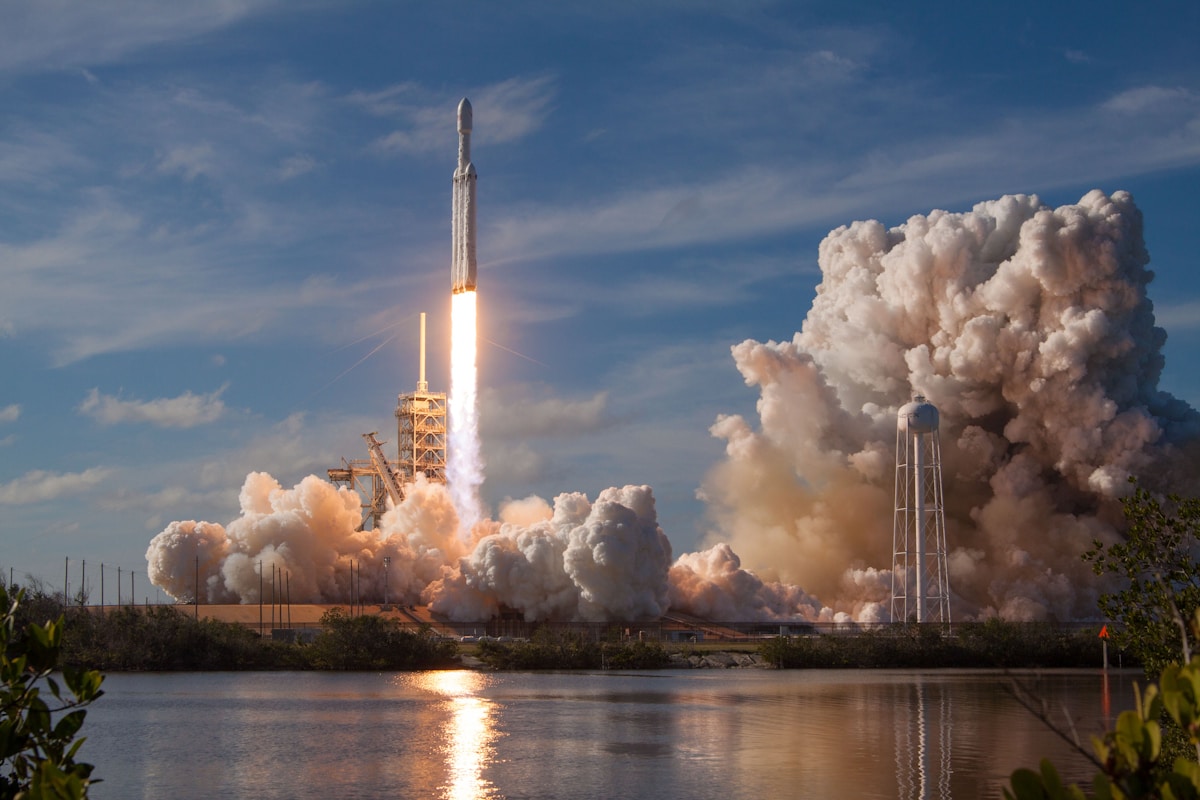
The week ending June 1, 2026 marked something genuinely unusual in capital-markets history: two companies — one building AI models, one building rockets — filed paperwork for what could collectively rank among the three largest public offerings ever attempted, with a third AI lab preparing to follow. Anthropic's confidential S-1 landed at the SEC on June 1, barely twelve days after SpaceX's public S-1 hit EDGAR on May 20. OpenAI reportedly filed its own confidential draft around May 22. If all three listings execute as signalled, public-market investors will absorb more than $1 trillion in combined reported private-market valuation across a single IPO season. That has never happened before.
This piece walks through what each filing actually says, where the numbers come from, and what the mechanics mean for anyone — including Indian retail investors — trying to understand what is actually being priced.
SpaceX: The S-1 Is Public and the Numbers Are Specific
SpaceX filed its public S-1 registration statement with the SEC on May 20, 2026 (SEC accession no. 0001628280-26-036936), targeting a Nasdaq listing under the ticker SPCX on June 12, 2026. Goldman Sachs holds the lead-left bookrunner position; Morgan Stanley is the stabilisation agent and runs the directed retail-share programme; Bank of America, Citigroup, and JPMorgan round out the top tier of what CNBC reported as a 21-bank syndicate code-named Project Apex.
What the Filing Actually Shows
The S-1 discloses GAAP financials for the full year 2025 and Q1 2026. Total 2025 revenue: $18.7 billion. The breakdown matters:
- Connectivity (Starlink): $11.4 billion — up 83% year-over-year, from $7.7 billion in 2024. Starlink had 8.9 million subscribers at end-2025, rising to 10.3 million by March 2026. Average revenue per user has compressed from roughly $99/month in 2023 to $66/month by Q1 2026 as SpaceX pushes into lower-income markets.
- Space (launch + crew services): $4.1 billion. Falcon 9 and Dragon are profitable; Starship R&D consumed $3.0 billion in 2025 alone and had delivered zero commercial payloads as of the filing date.
- AI (xAI segment, absorbed February 2026): $3.2 billion in 2025 revenue, but $12.7 billion in capex, and Q1 2026 AI revenue of $818 million — only 12.5% quarter-over-quarter growth — against continued heavy spending.
Net loss in 2025: $4.9 billion. Adjusted EBITDA: $6.6 billion, almost entirely driven by Starlink's 63% adjusted EBITDA margin. Q1 2026 showed $4.7 billion in revenue and a $1.9 billion operating loss — the xAI integration is expensive.
The Valuation Math and Its Assumptions
The target raise of up to $75 billion at a reported $1.75–1.8 trillion valuation would shatter Saudi Aramco's 2019 record of $35.4 billion raised. At $1.75T on $18.7B of 2025 revenue, SpaceX is being priced at roughly 94x trailing revenue — a multiple that works only if you believe Starlink can scale to hundreds of millions of subscribers and Starship eventually captures meaningful commercial payload economics. Bloomberg noted that the listing structure — Elon Musk's Class C super-voting shares — means institutional index funds and retail investors who buy SPCX will have limited governance voice. That is a material risk factor disclosed in the filing, not a footnote.
The xAI integration adds complexity. The February 2026 all-stock deal that absorbed xAI (valued at approximately $250 billion at the time, against a then-$1 trillion SpaceX valuation) folded in X (formerly Twitter) and Grok. The S-1 discloses negative free cash flow of $12.8 billion in 2025, a figure that deteriorated further in Q1 2026. A $75 billion raise buys roughly two years of runway at the current burn rate.
Anthropic: Confidential Filing, Reported Numbers, No Public Prospectus Yet
Anthropic filed a confidential S-1 draft with the SEC on June 1, 2026 — the same day the filing was reported by CNBC and Bloomberg. A confidential filing is materially different from SpaceX's situation: the document is not yet public. The SEC reviews it privately; Anthropic can amend it before any public disclosure. Share count, price range, and use of proceeds have not been set. Bloomberg reported in March 2026 that the company was weighing a debut as early as October 2026; a TradingView-cited target of October 23, 2026 is speculative at this stage.
The Funding Round That Preceded the Filing
Four days before the S-1 landed, on May 28, 2026, Anthropic closed its Series H round: $65 billion raised at a $965 billion post-money valuation, led by Altimeter Capital, Dragoneer, Greenoaks, and Sequoia Capital. CNBC reported this eclipsed OpenAI's then-$852 billion private valuation for the first time, making Anthropic the world's most valuable AI startup by reported private-market price.
Revenue: ARR vs. GAAP
The $47 billion figure widely cited is an annualised run rate (ARR) — not GAAP revenue. ARR is calculated by taking a recent monthly or quarterly revenue figure and multiplying by 12. It tells you the forward trajectory at a snapshot in time; it is not what Anthropic earned in a 12-month period. Bloomberg reported the company expects Q2 2026 revenue of approximately $10.9 billion — more than doubling the prior quarter — and said Anthropic is on track for its first profitable quarter. At $47 billion ARR, Anthropic would be generating roughly $3.9 billion per month; the earlier disclosed run rates ($9 billion in early 2026, $30 billion by April) show an acceleration curve that is steep enough to strain any model. The GAAP revenue figure for a full fiscal year will only be visible when the public prospectus is filed — likely 3–4 weeks before any pricing.
Goldman Sachs, JPMorgan, and Morgan Stanley are reportedly in early discussions as lead underwriters, per Bloomberg, but no mandate has been formally announced.
The PBC Structure and What It Means for Shareholders
Anthropic is incorporated as a Public Benefit Corporation with a capped-profit structure. The company's charter constrains investor returns so that a significant portion of any upside flows toward its stated public-benefit mission. For public-market investors, this is not merely a philosophical detail: it affects how distributions, buybacks, and any future acquisition premium would be structured. The public S-1, when filed, will need to explain how the PBC obligations interact with standard shareholder return expectations — a disclosure challenge that has no obvious precedent at this scale.
OpenAI: Third in Line, First in Mind Share
OpenAI filed its own confidential S-1 around May 22, 2026, with Goldman Sachs, Morgan Stanley, and JPMorgan as reported lead underwriters, per CNBC and Axios. The company is reportedly targeting a September 2026 listing. Its last disclosed private valuation was $852 billion (March 2026); revenue runs at approximately $2 billion per month, though the company has disclosed it loses $1.22 for every $1 earned at current scale.
OpenAI's filing matters to the Anthropic and SpaceX discussion for a structural reason: three trillion-dollar-range AI/tech IPOs in the same calendar year will test public-market capacity. Institutional allocations, index-rebalancing flows, and retail attention are finite. TradingKey has noted that the sequencing — SpaceX in June, Anthropic potentially in October, OpenAI in September — creates overlapping demand windows. Which one gets priced up and which one gets quietly trimmed will depend heavily on how SpaceX's first weeks of trading perform.
The Comparison Table
The figures below use reported private-market valuations, not market capitalisation (which does not yet exist for Anthropic or OpenAI). ARR and run-rate figures are as reported; they are not audited GAAP annual revenue.
| Company | Reported ARR / Revenue | Last Private Valuation | IPO Target Valuation | IPO Target Raise | Ticker | Listing Venue |
|---|---|---|---|---|---|---|
| SpaceX (SPCX) | $18.7B GAAP revenue (FY2025) | ~$1T (pre-xAI deal, Feb 2026) | $1.75–1.8 trillion | Up to $75B | SPCX | Nasdaq |
| Anthropic | ~$47B ARR (reported run rate, May 2026) | $965B post-money (Series H, May 2026) | Not yet set (confidential filing) | Not yet set | TBD | TBD (Nasdaq likely) |
| OpenAI | ~$24B ARR (~$2B/month) | $852B (March 2026) | ~$1T (reported target) | Not yet set | TBD | TBD |
| Databricks (recent comp) | $5.4B ARR (Feb 2026) | $134B (Series L, Dec 2025) | IPO-ready; no date set | N/A | TBD | TBD |
Databricks is included as a reference point: at $134 billion on $5.4 billion ARR, it trades at roughly 25x ARR in private markets. Anthropic at $965 billion on $47 billion ARR implies approximately 20x ARR — a compressed multiple relative to Databricks, which reflects Anthropic's heavier compute costs and the PBC structure. SpaceX's GAAP revenue multiple of ~94x is an entirely different animal, premised on Starlink's recurring connectivity economics rather than software margins.
What the Indian Retail Investor Can and Cannot Do
None of these IPOs will be listed on Indian exchanges. There are no domestic depository receipts, no Nifty-linked products, and no BSE/NSE mechanism that will give direct access on day one.
Indian resident individuals can invest in US-listed stocks through international broking platforms — Vested, INDmoney, Groww Global, IBKR India — all of which route through the Liberalised Remittance Scheme (LRS). The annual LRS cap is $250,000 per individual per financial year. Critically, once total outward remittances in a financial year cross ₹10 lakh, Tax Collected at Source (TCS) of 20% applies to the excess on investment-related transfers. This TCS is not a final tax — it is creditable against your income tax liability — but it is a cash-flow drag. For SpaceX specifically, IPO allocations to retail outside the US will be limited; most international retail access will come through secondary-market purchases after the June 12 listing date.
There is a practical sequence: SpaceX trades on Nasdaq from June 12. Indian investors who want exposure can buy SPCX through an LRS-enabled international brokerage from June 12 onward, subject to the TCS rules. For Anthropic and OpenAI, nothing is available to retail — Indian or otherwise — until public S-1s are filed and the IPOs are priced, which is months away at minimum.
What to Watch
-
SpaceX roadshow pricing (June 11): The spread between the indicated $1.75T and any final priced valuation will set the tone for Anthropic and OpenAI's underwriter conversations. A haircut signals the market is more sceptical than the private-round lead-ins suggest.
-
Anthropic's public S-1: When it is filed — likely 3–4 weeks before any pricing — it will be the first time audited GAAP revenue, gross margin, and compute-cost breakdowns are visible. The gap between ARR and actual booked revenue will be the number to watch. Also watch how the PBC profit cap is defined and whether it triggers any SEC comment letters.
-
xAI burn trajectory: SpaceX's Q2 2026 results (expected August) will show whether the AI segment's $818 million Q1 revenue is accelerating or plateauing against continued multi-billion capex. Starlink's ARPU compression — $66/month vs. $99/month two years ago — is a structural trend worth watching for service-level growth assumptions.
-
OpenAI's GAAP profitability timing: Revenue at $2 billion per month with a -$1.22 cost for every $1 earned is a loss-per-dollar structure that needs to reverse before institutional investors will sustain a $1 trillion multiple. The confidential S-1 will eventually reveal the gross margin profile; the public version will be the first real look.
-
LRS threshold management for Indian investors: For any Indian retail investor planning to buy SPCX post-listing, the TCS clock starts at ₹10 lakh in the same financial year. Investors who have already remitted close to that threshold may want to plan the timing of their purchases relative to the April 1 LRS reset.
-
Index inclusion dynamics: Bloomberg noted that SpaceX's dual-class governance complicates MSCI and S&P 500 inclusion. If SPCX is excluded from major indices due to governance screens, passive funds cannot automatically absorb supply — which shifts price-setting power toward active institutions and, to a lesser extent, retail.
Primary sources: SpaceX S-1 on SEC EDGAR (accession no. 0001628280-26-036936, filed May 20, 2026); CNBC reporting on Anthropic's confidential S-1 filing (June 1, 2026); Bloomberg reporting on Anthropic's Series H and IPO timeline; CNBC reporting on SpaceX's Goldman Sachs bookrunner selection (May 19, 2026); Axios and CNBC on OpenAI's confidential filing (May 20–22, 2026).